Gentle Spinal Relief: How Decompression Therapy Eases Pressure and Disc Pain
Living with chronic back or neck pain can make even the simplest daily activities feel difficult. Sitting at a desk, lifting groceries, driving to work, or enjoying time with family may become uncomfortable when spinal pain interferes with everyday life. For many people, persistent discomfort is caused by pressure on the spinal discs and nerves, leading to symptoms that don’t always improve with rest or medication alone.
At Abundant Life Chiropractic, our goal is to help patients find safe, conservative solutions that support healing without surgery whenever appropriate. One treatment we often recommend is spinal decompression therapy, a gentle, non-invasive approach designed to reduce pressure on the spine, encourage natural healing, and improve overall function. When combined with a personalized chiropractic care plan, spinal decompression can help many patients move with greater comfort and confidence.
Whether you’re dealing with a herniated disc, degenerative disc disease, sciatica, or chronic neck and back pain, understanding how decompression therapy works can help you make informed decisions about your health.
What Is Spinal Decompression Therapy?
Spinal decompression therapy is a non-surgical treatment that gently stretches the spine using specialized equipment. Unlike forceful manipulation or traction techniques of the past, modern decompression therapy carefully controls the amount of pressure placed on the spine.
The treatment creates a controlled decompression force that helps relieve pressure between the vertebrae. As the spine is gently stretched, pressure within the spinal discs decreases, allowing the discs to rehydrate and receive nutrients that support healing.
Because spinal discs have limited blood supply, improving nutrient exchange is an important part of maintaining disc health. Reducing excessive pressure may also help decrease irritation affecting nearby spinal nerves.
Our team carefully evaluates every patient before recommending spinal decompression. Not every condition requires this therapy, which is why a personalized assessment is always the first step toward creating an effective care plan.
Understanding Your Spinal Discs
The spine is made up of individual bones called vertebrae. Between each vertebra sits an intervertebral disc, which acts as a cushion that absorbs shock and allows the spine to move smoothly.
Each spinal disc has two main parts:
- A soft, gel-like center called the nucleus pulposus
- A tougher outer layer known as the annulus fibrosus
Healthy discs help keep the spine flexible while protecting nerves that travel from the spinal cord to different parts of the body.
Over time, aging, repetitive movements, poor posture, injuries, or prolonged sitting can place additional stress on these discs. As pressure builds, discs may begin to bulge, herniate, or lose hydration, making them less effective at supporting the spine.
When this happens, nearby nerves may become irritated or compressed, contributing to symptoms such as:
- Lower back pain
- Neck pain
- Pain traveling into the arms or legs
- Tingling sensations
- Numbness
- Muscle weakness
- Reduced mobility
Spinal decompression therapy is designed to reduce these mechanical stresses so the body has a better opportunity to heal naturally.
Why Pressure on the Spine Causes Pain
Many spinal conditions involve one common issue: excessive pressure.
When the discs become compressed, several things may happen simultaneously:
Reduced Disc Height
As discs lose hydration, they become thinner. Less space between vertebrae can increase stress on joints, muscles, ligaments, and nerves.
Bulging or Herniated Discs
A damaged disc may begin pushing outward, placing pressure on nearby nerves. This often contributes to radiating pain down the arms or legs.
Inflamed Nerves
Compressed nerves may become irritated, leading to burning, tingling, numbness, or sharp pain during certain movements.
Muscle Tightness
When the spine isn’t functioning properly, surrounding muscles often tighten in an effort to stabilize the affected area. Unfortunately, muscle guarding frequently creates additional discomfort.
By reducing pressure throughout the spinal structures, decompression therapy addresses one of the underlying mechanical contributors to pain instead of simply masking symptoms.
How Spinal Decompression Therapy Works
Many people are surprised by how comfortable spinal decompression treatment feels.
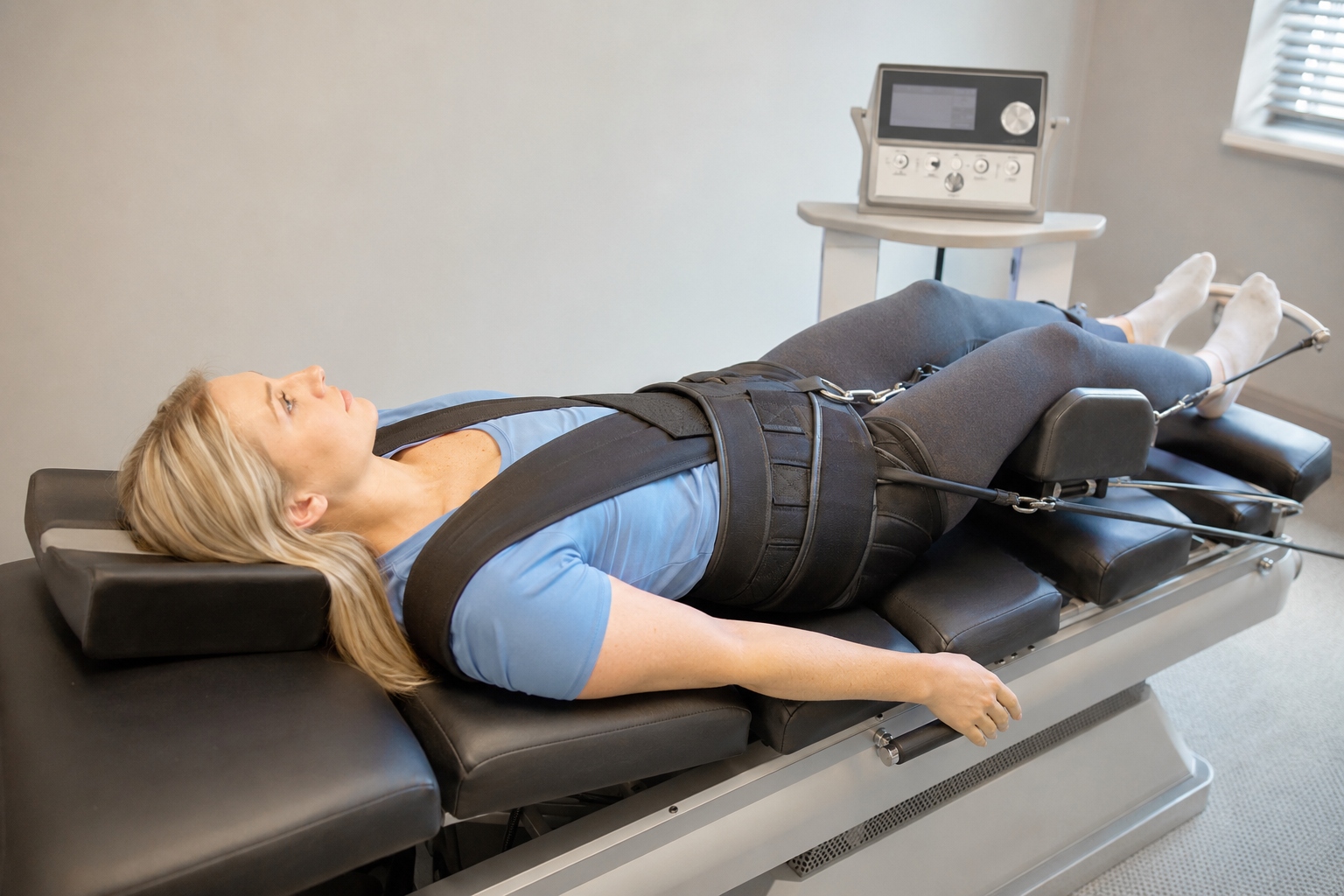
During therapy, you’ll lie comfortably on a specialized decompression table while a harness is gently positioned around your hips or upper body, depending on the area being treated.
The computerized table applies carefully controlled stretching and relaxation cycles designed specifically for your condition.
Rather than using one continuous pull, the equipment alternates between gentle distraction and relaxation phases. This controlled movement allows the muscles to remain more relaxed throughout treatment while encouraging gradual spinal decompression.
These cycles create negative pressure inside the affected discs. Researchers believe this reduction in internal disc pressure may help:
- Reduce compression affecting spinal nerves
- Encourage movement of nutrients into damaged discs
- Support hydration within spinal discs
- Improve spinal mobility
- Reduce stress placed on surrounding joints
Most treatment sessions last between 15 and 30 minutes, depending on each patient’s customized treatment plan.
Many patients find the sessions relaxing enough to rest comfortably during treatment.
Conditions That May Benefit from Spinal Decompression
Although every patient receives an individualized evaluation, spinal decompression is commonly recommended for several conditions involving disc-related pain.
Herniated Discs
When the soft center of a spinal disc pushes through its outer layer, nearby nerves may become irritated. As detailed by Mayo Clinic, common symptoms include:
- Sharp lower back pain
- Leg pain
- Neck pain
- Arm pain
- Tingling
- Numbness
Reducing pressure on the affected disc may help relieve irritation while supporting the body’s natural healing process.
Bulging Discs
Bulging discs occur when the outer layer extends beyond its normal position without completely rupturing.
Although less severe than a herniation, bulging discs can still create significant discomfort depending on their location.
Decompression therapy may help reduce stress on these discs while improving overall spinal mechanics.
Degenerative Disc Disease
Disc degeneration is a normal part of aging, but not everyone experiences pain.
For some individuals, discs gradually lose water content and flexibility, becoming thinner over time, according to Cleveland Clinic.
This may lead to:
- Chronic stiffness
- Reduced flexibility
- Back pain
- Neck pain
- Episodes of flare-ups
Our team often combines spinal decompression with chiropractic care and rehabilitative exercises to support long-term spinal function.
Sciatica
Sciatica occurs when the sciatic nerve becomes irritated or compressed. As noted on WebMD, symptoms often include:
- Pain radiating into one leg
- Burning sensations
- Tingling
- Numbness
- Difficulty sitting for long periods
Because many cases of sciatica originate from disc-related problems, reducing spinal pressure may help relieve irritation affecting the nerve.
Spinal Stenosis
Some patients experiencing certain forms of spinal stenosis may benefit from decompression therapy as part of a conservative treatment approach.
By gently improving spacing within portions of the spine, treatment may help reduce stress affecting surrounding tissues.
However, not every case of stenosis responds the same way, which is why careful examination is essential before beginning care.
What Makes Our Approach Different
At Abundant Life Chiropractic, we recognize that no two patients experience pain the same way. Two people with similar MRI findings may have very different symptoms, movement patterns, and treatment goals. That’s why we avoid one-size-fits-all care.
Before recommending spinal decompression, our team performs a thorough evaluation that may include reviewing your health history, discussing your symptoms, assessing posture and movement, and determining whether decompression is an appropriate option for your condition. If it is, your care plan is tailored to your specific needs rather than following a standard protocol.
We also understand that lasting improvement often requires more than one treatment approach. Depending on your diagnosis, spinal decompression may be combined with chiropractic adjustments, corrective exercises, soft tissue therapies, and lifestyle recommendations to support better spinal health over time.
Our focus isn’t simply helping you feel better after a visit—we strive to help you move better, function better, and enjoy daily activities with greater comfort. You can learn more about our full range of holistic options by exploring our services.
What to Expect During Your Treatment Plan
One of the most common questions we hear is whether spinal decompression therapy is painful. Fortunately, most patients describe the treatment as gentle, relaxing, and comfortable. Because the decompression table is computerized, every movement is carefully controlled to match your individualized treatment plan.
Depending on your condition and recovery goals, multiple treatment sessions may be recommended over several weeks. As healing progresses, our team monitors your response and adjusts your care plan when needed.
Recovery also involves what happens outside the office. We may recommend stretches, strengthening exercises, posture improvements, and ergonomic changes that help protect your spine during work, exercise, and everyday activities.
Supporting Long-Term Spinal Health
Reducing pain is important, but preventing future problems is equally valuable. Healthy habits can help support your spine long after treatment is complete.
Some simple ways to care for your back include:
- Practice good posture while sitting and standing.
- Lift with your legs instead of your back.
- Stay physically active with regular exercise.
- Maintain a healthy body weight to reduce spinal stress.
- Take breaks from prolonged sitting throughout the day.
- Sleep on a supportive mattress and pillow.
- Follow your personalized home exercise program.
These habits work together with chiropractic care and spinal decompression to promote better movement and long-term spinal wellness.
Is Spinal Decompression Right for Everyone?
Although spinal decompression helps many individuals with disc-related conditions, it is not appropriate for every patient. Certain medical conditions or spinal issues may require a different treatment approach.
That is why a comprehensive evaluation is always the first step. Our team takes the time to understand your symptoms, review your medical history, and determine whether spinal decompression is the safest and most effective option for your needs. If another conservative treatment is more appropriate, we will explain your options and recommend a care plan designed specifically for you.
The Benefits of a Personalized Approach
Every spine is different, and every patient has unique goals. Some people want to return to work comfortably, while others hope to enjoy sports, travel, or simply walk without constant pain.
Rather than focusing only on temporary symptom relief, we aim to improve spinal function and support your body’s natural ability to heal. By combining spinal decompression with other chiropractic services when appropriate, we can create a comprehensive plan that addresses both the source of discomfort and your long-term mobility.
Our goal is to help you move with greater confidence, improve your quality of life, and support lasting spinal health.
Frequently Asked Questions
How long does a spinal decompression session take?
Most treatment sessions last between 15 and 30 minutes, although the exact length depends on your personalized treatment plan.
How many treatments will I need?
The number of sessions varies based on your diagnosis, the severity of your condition, and how your body responds to care. We will discuss your recommended treatment plan after your evaluation.
Is spinal decompression the same as surgery?
No. Spinal decompression therapy is a non-surgical, conservative treatment designed to gently reduce pressure on the spine without invasive procedures.
Can spinal decompression help with sciatica?
Many cases of sciatica are related to spinal disc problems. By reducing pressure on affected discs and nerves, spinal decompression may help relieve sciatic nerve irritation for appropriate candidates.
Will I still need chiropractic care?
In many cases, spinal decompression works best when combined with chiropractic adjustments, therapeutic exercises, and other conservative treatments. Your care plan will be based on your individual needs.
Conclusion
Living with chronic back or neck pain does not have to become your new normal. When disc problems place pressure on the spine and surrounding nerves, everyday activities can become frustrating and uncomfortable. Fortunately, conservative treatments such as spinal decompression therapy may help reduce pressure, improve mobility, and support the body’s natural healing process.
At Abundant Life Chiropractic, we are committed to providing personalized care that focuses on your unique condition and long-term wellness. Whether you are experiencing a herniated disc, degenerative disc disease, sciatica, or ongoing spinal discomfort, our team is here to help you explore safe, non-invasive treatment options designed to restore comfort and function.
If back or neck pain is interfering with your daily life, you do not have to face it alone. Our team at Abundant Life Chiropractic is dedicated to helping patients find effective, personalized solutions through spinal decompression and comprehensive chiropractic care.
Contact us today to schedule your consultation and learn whether spinal decompression therapy is right for you.
Phone: (952) 300-8338
Email: pcc@abundantlifechiropractor.com
Address: 7945 Stone Creek Drive, #120, Chanhassen, MN
Website: abundantlifechiropractor.com
The post Gentle Spinal Relief: How Decompression Therapy Eases Pressure and Disc Pain appeared first on Abundant Life Chiropractic Health Center.
from
https://abundantlifechiropractor.com/gentle-spinal-relief-decompression-therapy/


No comments:
Post a Comment